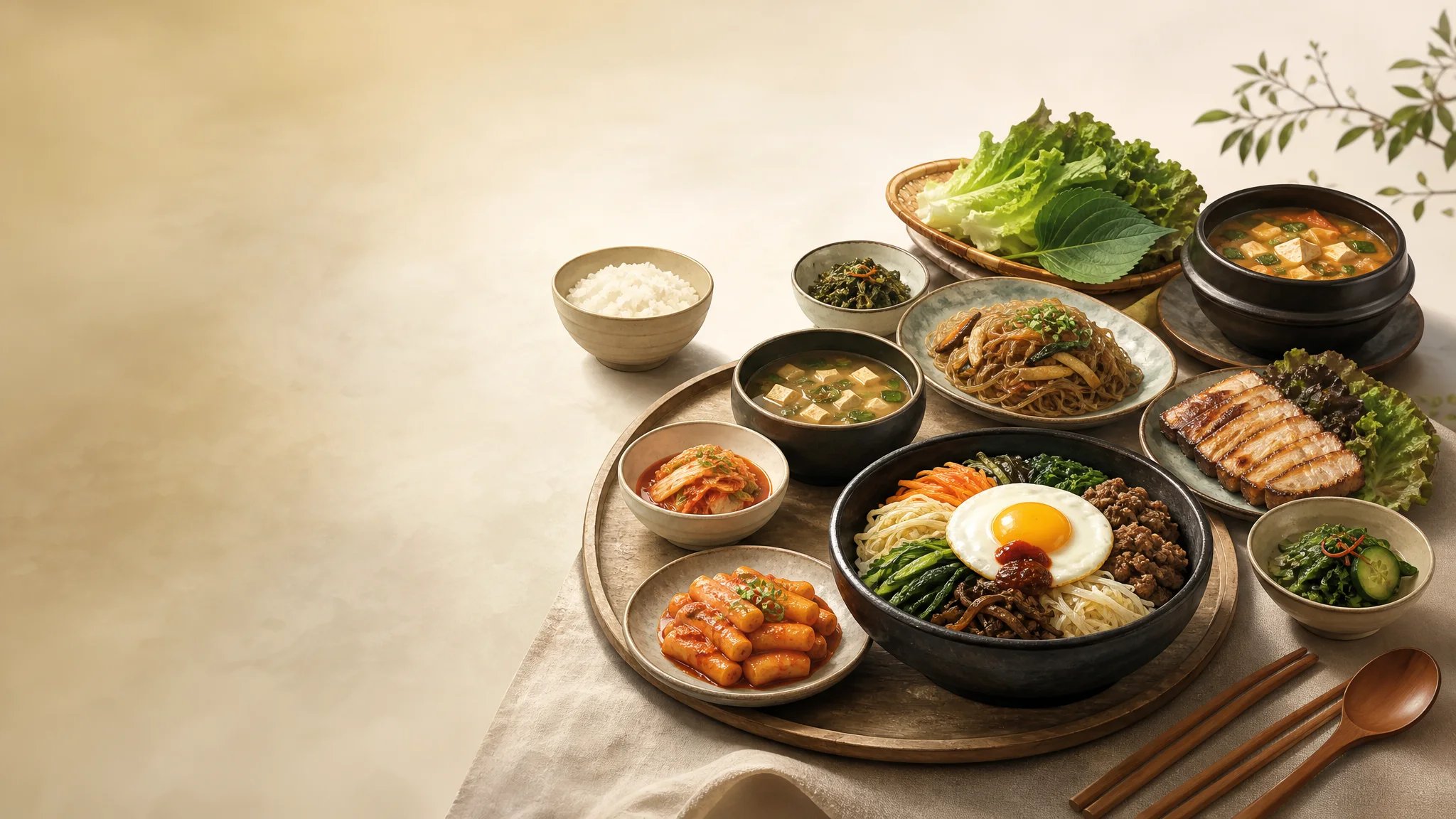
Key takeaway — Conclusion: Korean food is expanding beyond barbecue (grilled meats) and fried chicken to regional traditional dishes and modern fine/creative Korean cuisine. Choose dishes based on your budget, time, and willingness to try new things.
What is actually changing (evidence and context) - International coverage has recommended going "beyond standard Korean fare such as bibimbap, army stew and bingsu" and trying less-common regional dishes like gomtang and Jeju-style gogi-guksu. This signals broader variety in dining options. - At the same time, media exposure has driven a surge in interest and bookings for Korean fine dining. Some reservation platforms reported booking and waitlist registrations jumping approximately 303% in the five weeks after a popular series’ season premiere. - A government consumer survey published in 2025 found that “Korean-style fried chicken” was the Korean dish overseas consumers ate most often and liked most, while familiarity with Korean food and intent to revisit remained high—confirming both quantitative and qualitative growth in demand.
(These points summarize international media reports and the 2025 government survey materials.)
Who this guide is for — choice trade-offs - Travelers/novices: If you want a quick meal with low risk of disappointment, fried chicken or staple dishes like bulgogi/bibimbap are still safe choices. (Pros: easy ordering, menus often translated / Cons: limits novel experience) - Food explorers/gourmets: Try regional specialties (e.g., Jeolla stews, Gyeongsang hotpots, Jeju gogi-guksu) or modern Korean tasting menus. (Pros: original experience / Cons: requires reservations, possible ingredient or language limits) - Budget/time-limited groups: Try takeaway street-food-style dishes (tteokbokki, kimbap, twigim/fried snacks) to sample Korean flavors affordably.
Your choice depends on what you’re willing to give up: convenience (chicken/BBQ) vs originality/cultural depth (regional traditions and fine dining).
Quick decision rules (at a glance) | Situation | Recommended choice | Order tip (Korean phrase) | Reservation/Timing | Notes | |---|---:|---|---:|---| | Low budget/time, novice | Fried chicken, bibimbap, bulgogi | "이거 매운가요? 추천해주세요." | Walk in / delivery available | Watch for fried foods' oiliness and high protein | | Solo / light tasting | Street snacks (tteokbokki, kimbap, odeng) | "1인분(1인세트)으로 가능해요?" | Avoid peak lunch/dinner rush | Note spiciness and wheat (gluten) in some items | | Try regional specialties (adventurous) | Gomtang, kongnamul-gukbap, Jeju gogi-guksu, etc. | "이 집의 대표 메뉴 뭐예요? 추천해 주세요." | Go at local peak times or evening | Check for seafood/fermented-ingredient allergies | | Special experience (gourmet) | Modern Korean / tasting menu | Reservation required; multi-course possible | Book weeks ahead | Notify about price, allergies, vegetarian needs in advance |
Menu-ordering checklist (practical phrases) - Ask for recommendations: "추천 메뉴가 뭐예요? / 추천해 주세요." (reduces risk of a bad choice) - Spice level: "맵지 않게 해 주세요" / "안 매운 걸로 부탁해요." (many dishes can be adjusted) - Single-portion: "1인분 있어요?" / "한 명인데 먹기 괜찮을까요?" - Allergy notice: "저는 (해산물/견과류/유제품)에 알레르기가 있어요." (tell staff in advance) - Sharing: "반반(나눠먹기)해도 돼요?" (generally possible, but table setup may differ)
Ingredients and dietary cautions - Fermented foods (kimchi, jeotgal): often high in sodium and may contain seafood-based salted ingredients—check if pregnant or on low-sodium diet. - Spiciness: gochujang and gochugaru determine heat; some dishes can be very spicy even if adjustable. - Gluten, nuts, dairy: present in batter, sauces, and some seasonings — inform staff if you have allergies.
Practical tips — where, what and when to order (or reserve) - Quick meal (tourists/business): avoid the lunch peak (12:00–13:30); go before 11:30 or after 14:00 if possible. - Fine dining / tasting menus: media influence has made some restaurants very popular—use advance reservations and waitlist registrations after busy broadcast periods. - Regional specialty restaurants: serving times or ingredient availability (e.g., fresh fish or local produce) may limit availability—check local opening hours.
Decision rules (summary) 1) Novice or quick meal → go with staples (chicken, bibimbap, etc.). 2) Want a new regional food experience → try local soups, hotpots, noodles (confirm spice and ingredients first). 3) Special occasion / gourmet experience → modern Korean tasting menu (reserve ahead; declare allergies/vegetarian requests).
Who this advice is for: foreign readers, travelers, and food explorers who have tried Korean food once or twice and want to take the "next step" into regional, traditional, or modern Korean cuisine.
What you give up (trade-off): convenience (fast and easy) vs originality (new flavors and cultural experience). Budget and reservation availability will shape your choice.
When recommendations might change: COVID-19, ingredient supply issues, or new media exposure (for example a popular TV series) can rapidly alter demand and reservation conditions. Check government reports and live reservation platforms or call restaurants for up-to-date details.
---
Editor’s note: This guide is based on international coverage recommending regional dishes, AP reporting on fine-dining demand statistics, and the 2025 MAFRA/KFPI overseas consumer survey. Verify publication and survey dates (e.g., MAFRA survey publication: 2025-11-25) and confirm the latest reservation and opening information with booking platforms or the restaurant before visiting.