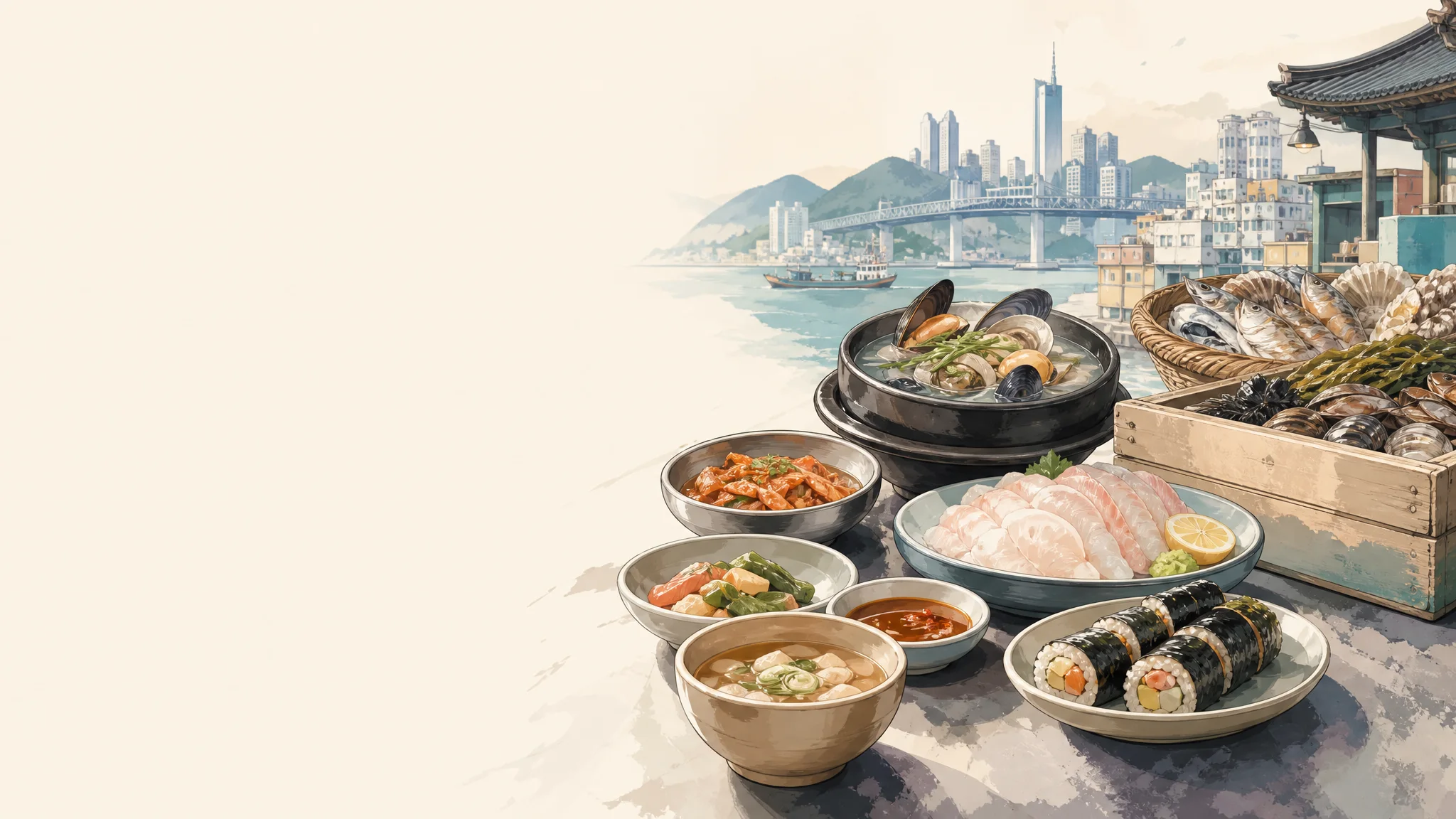
Key point: TripZilla has named Busan the 2026 “Best Culinary Destination” — use this guide to quickly decide what to eat, when, where and for how much (includes price ranges, ordering phrases, hygiene and timing tips). (Source: TripZilla)
Why this award matters — practical effects for travelers
- Summary of the award rationale: TripZilla cited Busan’s fresh seafood markets, local specialties like pork soup (dwaeji-gukbap) and milmyeon, and a vibrant street-snack culture (for example, seed hotteok) as reasons for the culinary destination ranking. This recognition can increase interest among Southeast Asian and wider Asian travelers. (Source: TripZilla)
- Local government reaction: The Busan city government announced the award in an official press release on 2026-11-05 and said it will strengthen links between tourism and local food content. The award itself may have a tangible effect on demand for local restaurants and markets. (Source: Busan Metropolitan Government)
What to eat — four core dishes compared (price · place · ordering phrase · precautions)
| Dish | Typical price range (per person; varies by time and vendor) | Recommended area/place | Simple ordering phrase (Korean) | Allergy / other notes |
|---|---|---|---|---|
| Dwaeji-gukbap (pork soup / gukbap) | About ₩9,000–12,000 (some famous old shops may differ). (example range) | Traditional gukbap alleys near Busan Station, Seomyeon, Dongnae (fast meal, best value). | "돼지국밥 하나 주세요." (One dwaeji-gukbap, please.) | Contains pork — not suitable for halal or vegetarian diets. You can request broth strength depending on shop. (Source: local reporting) |
| Milmyeon (wheat noodle in cold broth or mixed) | Local eateries: ₩7,000–12,000 (example: ₩7,500 reported by some listings). | Near Gukje Market, Nampo-dong, Haeundae shops known for milmyeon. | "밀면 하나(비빔/물) 주세요." (One milmyeon, bibim/water please.) | Noodles contain gluten; broths may use pork or beef bones — check for vegetarian/halal needs. (Source: user listings) |
| Sashimi / raw fish (hoe) | Depends on course and selection: roughly ₩40,000–80,000 per person or more (example for Jagalchi/Gwangalli area seafood courses). | Jagalchi Market, Gwangalli, Haeundae sashimi restaurants (sea-view options cost more). | For takeaway: "회 2인분 포장해주세요." / Dining: "회(모둠) 2인분 주세요." | Risk for seafood allergy; higher risk of foodborne illness (e.g., Vibrio) in summer — choose hygienic shops. (Source: travel guides) |
| Seed hotteok (street snack) | About ₩2,000–4,000 each (varies by vendor and size). | BIFF, Nampo-dong, around Gwangbok and canned market. | "씨앗호떡 하나 주세요." (One seed hotteok, please.) | Contains nuts/seeds — check for nut allergies at some vendors. |
(Price examples vary by source and time; always check the menu on site.)
Market tips (Jagalchi · Gukje) — hours, how to use, cash tips
- Best time to go: Fish market stalls and auctions are busiest early in the morning. Tourist-oriented restaurants (often on the second floor) operate from later in the morning; general market hours are commonly listed as roughly 05:00–22:00 but vary by vendor. Check operating days and regular monthly closures in advance. (Source: Visit Busan)
- How to buy / eat at Jagalchi: It’s common to choose fresh fish on the ground floor and take it to a second-floor restaurant to be served with sauces and side dishes. There may be a table charge or separate service fee — confirm prices and what’s included. Cash is often convenient in many stalls. (Source: local guides)
- Card / takeaway tips: Many sashimi restaurants accept cards, but small takeaway stalls or street vendors may prefer cash. Say "포장" clearly when ordering takeaway.
Basic ordering phrases — ready-to-use Korean expressions
- Dwaeji-gukbap: "돼지국밥 하나 주세요." / If you want it mild: "맵지 않게 해주세요."
- Milmyeon: "물밀면/비빔밀면 하나 주세요."
- Sashimi to-go: "회 2인분 포장해주세요."
- Street snack: "씨앗호떡 하나 주세요."
- Allergy / dietary requests: "저는 (해산물/돼지고기/견과류)에 알레르기가 있어요. (예: 돼지고기 빼고 가능할까요?)"
If communication is difficult, point to the menu or ask staff in simple English — many tourist-area vendors provide basic English guidance. (Source: tourism portal)
Safety & hygiene warnings (who should be careful?)
- Who should be cautious: Children, pregnant people, immunocompromised travelers, and those with seafood allergies. Eating raw seafood (sashimi, shellfish) carries higher foodborne illness risk in summer (e.g., Vibrio) — prefer establishments with clear hygiene practices. (Source: food safety authorities)
- Practical rules: Consume sashimi and shellfish the same day; stop eating if smell or color seems off or if handling looks unsanitary. Check refrigeration for outdoor storage. (Source: government safety guidance)
Decision rules (quick checklist) — pick what to eat in one step
- Budget around ₩10,000 and need a fast meal: dwaeji-gukbap → eat at a local old shop in under 10 minutes. (Source: local reporting)
- Hot day and want a cool meal: milmyeon (mul-milmyeon) → Gukje Market / Nampo-dong recommended. (Source: user listings)
- Sea-flavored dinner / special meal: Jagalchi / Gwangalli sashimi course (budget ₩40,000+) — check hygiene, season and daily market price. (Source: tourism portal)
- Quick street snack / dessert: BIFF / Nampo-dong seed hotteok, odeng, etc.
(Adapt these rules for companions, allergies or halal/vegetarian needs — check in advance for special-diet availability.) (Source: halal guides)
When to change these recommendations (uncertainties & variables)
- Season and seafood price swings: Fish prices and course composition change — check the market or restaurant for the day’s prices before ordering. (Source: tourism portal)
- Foodborne illness risk, weather, holidays: Summer, monsoon season and national holidays (Lunar New Year, Chuseok) can affect shop operations and hygiene — consider alternatives like cooked dishes or packaged foods in these cases. (Source: food safety authorities)
- Halal / vegetarian needs: Menus and certifications change frequently — contact restaurants directly or check for certification before relying on availability. (Source: halal guides)
---
Summary checklist (quick):
- Decide budget, companions and allergies → choose from the table above → split market visits between morning (freshness) and evening (dining) as appropriate → learn the ordering phrases → follow hygiene and allergy precautions.
This guide is based on TripZilla’s award announcement, Busan city press release (2026-11-05), Visit Busan market guidance, local restaurant price lists and user reports, and food safety authority recommendations. (Key sources: TripZilla award page; Busan Metropolitan Government press release; Visit Busan market guide; local pricing and user listings; food safety guidance.)