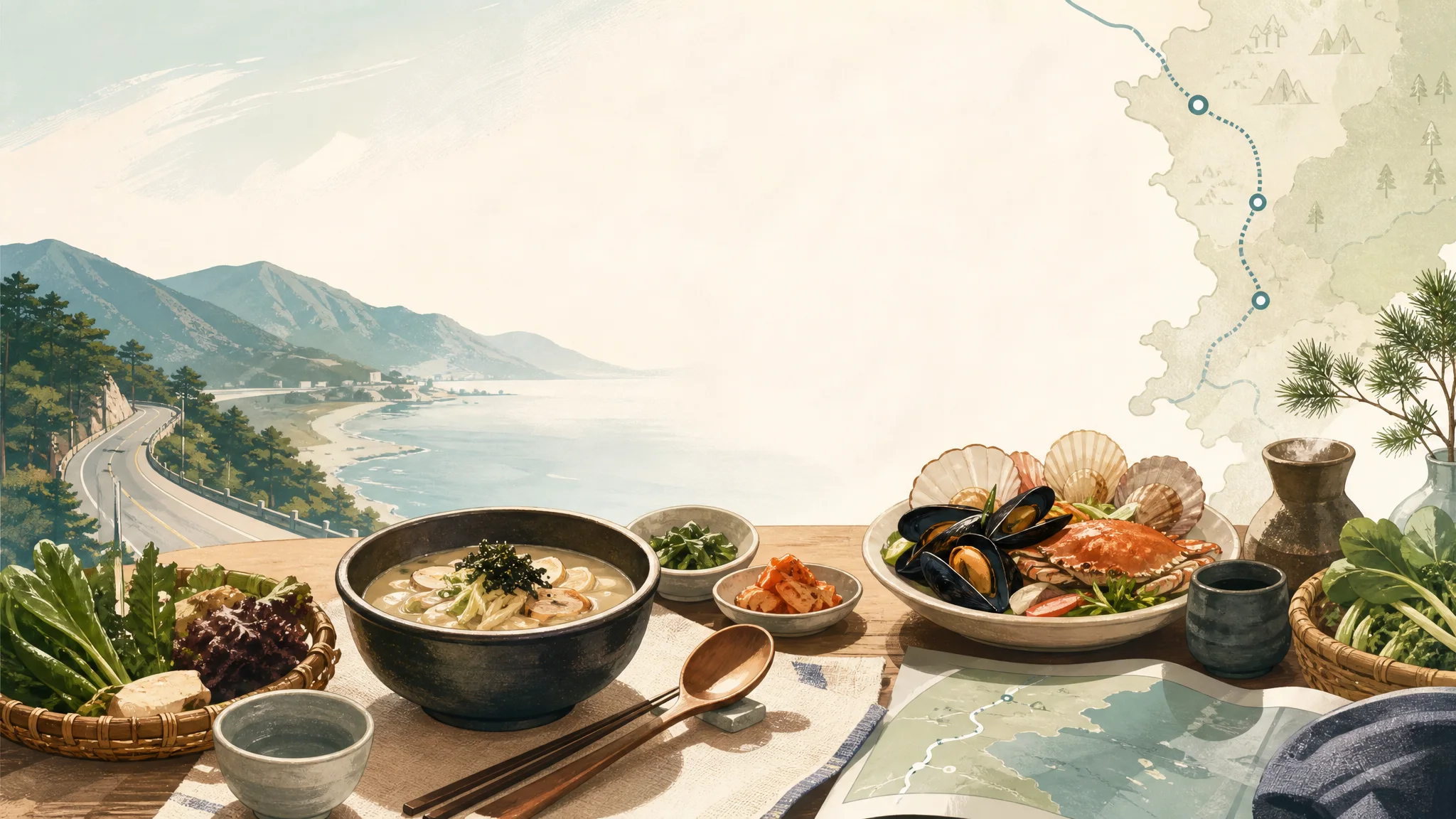
Key summary — one line
If your final day in Gangwon (Chuncheon–Gangchon–Sokcho route) prioritizes groups/experience, choose dakgalbi (shared, filling) → before/after the Gangchon (Gimyujeong) railbike ride have makguksu (light, regional buckwheat noodles) or finish at Sokcho fish-market snacks. Budget using dakgalbi ≈ ₩12,000–₩16,000 per person and railbike fares 2-seater ₩40,000 / 4-seater ₩56,000.
Who this is for — trade-offs
- Active roadtrippers in small groups (2–4): dakgalbi (shared iron-plate stir-fry) — good for communal eating and quick recovery.
- Solo travelers or those wanting a light lunch: makguksu (buckwheat noodles) — fast and refreshing.
- If the priority is an experience (railbike / activity): avoid overeating before the activity and prefer makguksu or light seafood snacks.
Trade-offs: dakgalbi is spicy/oily and can feel heavy right before activities; makguksu is less filling and you may want another meal later. Allergy or dietary restrictions (seafood, nuts, soy), vegetarian or halal needs will change choices.
What would change the recommendation? Season (hot soups preferred in winter), group makeup (children or pregnant travelers prefer milder/less oily dishes), and activity order (whether you do the railbike before or after eating).
Comparison table (use case · taste · budget)
| Priority / situation | Dish | Taste / characteristics | Budget (regional, per person) |
|---|---|---|---|
| Group / party meal | Dakgalbi (Chuncheon) | Spicy iron-plate stir-fry — finished with fried rice, communal style fits social dining | ₩12,000 ~ ₩16,000 (varies by restaurant & toppings) |
| Light lunch / summer | Makguksu (Chuncheon) | Cold buckwheat noodles, refreshing — can pair with seafood or bossam (boiled pork) | Typically ₩6,000 ~ ₩10,000 (by shop/area) |
| Market snacks / on-the-go | Sokcho fish-market street food (e.g., ojingeo-sundae, fried seafood) | Fresh seafood-based, meant for immediate eating (watch allergies) | Plates/snacks vary ₩5,000 ~ ₩20,000 |
| After/between activities | Small snacks / cafes around the railbike | Energy top-up & photo breaks — use railpark cafés/stands | Railbike fares: 2-seater ₩40,000 / 4-seater ₩56,000 (ticket fares) |
(Price ranges reflect regional tourism and operator guidance — seasonal and shop-level variation possible.)
Practical ordering phrases (on-site · Korean)
- Asking for a table: "2 people, do you have a seat?" → Korean: "2명입니다. 자리 있어요?"
- Ordering dakgalbi: "Dakgalbi for 2, please." (Korean: "닭갈비 2인분 주세요.")
- Ordering makguksu: "One makguksu, please." (cold: "물막국수 하나 주세요." / spicy-mixed: "비빔막국수 하나 주세요.")
- Requests for spice/allergy: "Please make it not spicy." (Korean: "맵지 않게 해 주세요.") / "I can't eat seafood (or pork)." (Korean: "저는 해산물(또는 돼지고기)을 못 먹어요.")
- Paying / takeout: "Check, please." (Korean: "계산서 주세요.") / "Please pack this to go." (Korean: "포장해 주세요.")
Romanization (pronunciation help): Dakgalbi 2-inbun juseyo. Makguksu hana juseyo. Mappji anhge haejuseyo.
Consider adding short English translations for staff: "Not spicy please" or "I have a seafood allergy."
Ingredients · allergy · diet notes
- Dakgalbi / jaeyuk: chicken or pork-based — beware for religious or allergy restrictions.
- Makguksu: buckwheat (possible buckwheat allergy), kimchi base may include salted seafood.
- Sokcho / Gangneung seafood: shellfish, squid, shrimp allergies common—caution.
- Side dishes (banchan): may contain dried anchovy, salted seafood, or tuna — ask ahead for vegetarian/vegan/halal/kosher needs.
Railbike · meal flow tips (times · reservations)
- Railbike reservations & fares: Gangchon (Gimyujeong) railbike fares are 2-seater ₩40,000 / 4-seater ₩56,000; official operation times and refund rules are published. Weekends and peak season have more runs but sell out quickly, so book ahead.
- Meal timing: avoid heavy meals right before the railbike. After riding, head into Chuncheon city to Dakgalbi Street for dinner.
- Public transport access: Chuncheon is reachable by ITX/train within about an hour — check train times when planning lunch/dinner movements.
On-site checklist (copy before departure)
- [ ] Confirm group size → choose railbike (2/4) or dakgalbi table size
- [ ] Check major allergies/diets (seafood, pork, gluten/buckwheat) for each member and notify restaurants in advance
- [ ] Pre-book railbike tickets (especially weekends/peak) — verify 2-seater/4-seater fares
- [ ] Prepare cash & cards (some rural shops prefer cash or may charge card fees)
- [ ] Check travel time between stops (railbike → Chuncheon city → Sokcho fish market)
Conclusion (recommended rule)
- If the group's goal is "eat and enjoy together," prioritize dakgalbi (Chuncheon), then add makguksu or market snacks as a dessert/side.
- If solo or activity-focused, pick a bowl of makguksu + Sokcho market snacks.
- If spending money on the railbike experience, include the ticket fare in your budget and choose cost-effective meals (makguksu or light seafood) accordingly.
Note: price and operation details are compiled from regional operators, travel guides, and local postings (subject to seasonal and shop-level changes). Confirm reservations, opening hours, and exact menu prices with the venues or the operator (Railpark) before visiting.