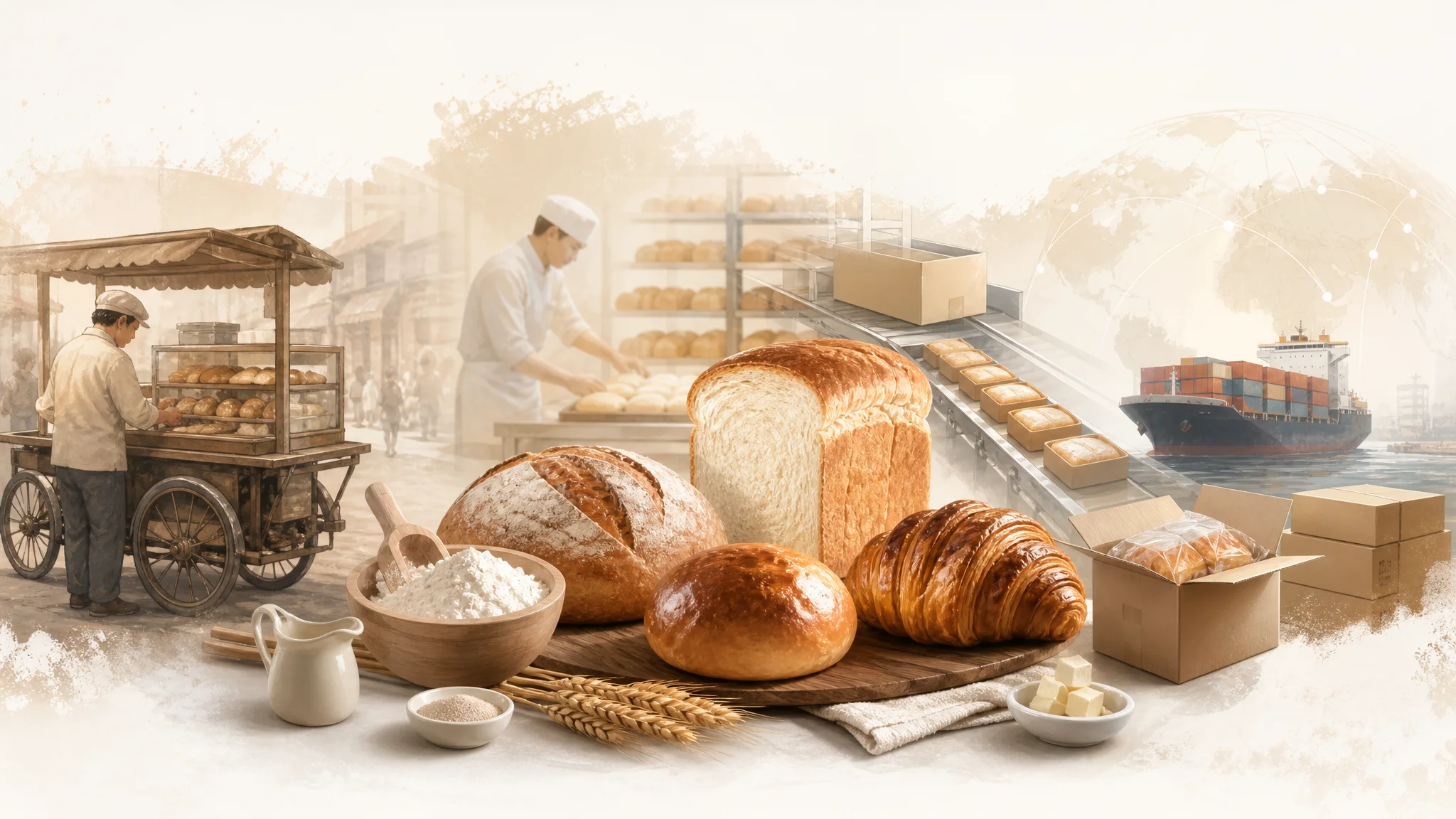
Key summary — Direct answer: To pick the best value bread in Korea now, follow this order: check the package weight (g) → calculate price per 100g → consider purpose (meal, snack, gift) and allergens. Recent materials — including an FTC‑commissioned study and Korea Customs export data — recommend the 100g unit price and measures like store counts and export performance as useful benchmarks when evaluating Korean bread prices and the bakery sector.
K‑bread today: scale and significance
- What numbers are confirmed
- According to recent reports (by reporting standards), the number of bakeries in Korea was about 28,184 in 2023; for comparison, Statista counted 25,234 enterprises in Italy in 2022 in the "bread, fresh pastry goods and cakes" sector. Be cautious when comparing these figures because of different counting criteria. (Sources cited in original: Seoul City Media Hub, Statista, FTC‑commissioned report metadata)
- On exports, K‑bakery (bread, biscuits, cakes, etc.) recorded a record high in 2024 (January–November) with exports of about 400 million US dollars.
- Why this matters to consumers
- More stores and rising exports mean more choices (brands and styles), but they also reflect franchise-driven marketing and price competition that affect consumer prices. The FTC‑commissioned study highlights the 100g unit price as a core metric for perceiving price levels.
Practical decision rules: how to decide what to buy (step by step)
1) Define your purpose: breakfast (loaf/sandwich bread), on-the-go snack (sweet bun, salt bread, croissant), gift (cake, premium patisserie).
2) Check the packaging: weight (g), ingredients (especially allergenic components), production date and expiration date.
3) Compare by price per 100g (recommended by the report):
- Formula: 100g price = (selling price ÷ weight (g)) × 100
- Why? The FTC‑commissioned study used the 100g unit price to compare prices across countries and item types; the study (as cited in media) analyzed Korea's average at 703 won per 100g.
4) Judge perceived quality: prioritize freshness (production date), ingredient listing (milk, butter, egg, nuts), and texture (crisp/chewy/soft) according to intended use.
Ready phrases to use when ordering or buying (Korean)
- Payment and packaging
- "이거 포장해 주세요." / "포장해 주세요." (please wrap this)
- "이거 테이크아웃할게요." (I'll take this to go)
- "지금 만든 건가요? 제조일 언제예요?" (Is this freshly made? What's the production date?)
- Allergy and ingredient questions
- "이 빵 안에 우유(유제품)/달걀/견과류(호두, 아몬드) 들어가나요?" (Does this contain milk/egg/nuts?)
- "글루텐 프리 제품 있나요?" (Do you have gluten‑free items?)
- Customization requests (if the store can accommodate)
- "식빵 4등분(또는 두꺼운 슬라이스)로 잘라 주세요." / "토스트용으로 잘라 주세요." (please cut the loaf into four / thick slices for toast)
- "속 재료(크림·잼) 덜어 주세요." (please reduce the filling/cream/jam)
Ingredients, allergy warnings and label checklist
- Must‑check items: wheat (gluten), milk, eggs, nuts, soy. Packaged products sold in Korea must list allergenic ingredients, so check the "allergy‑causing ingredients" section on the label (subject to import/distribution rules).
- For display or freshly prepared items, ask staff directly about allergens rather than relying on packaging.
Practical comparison table: which bread for which purpose
| Purpose | Recommended bread style | Points to check when ordering |
|---|---|---|
| Breakfast (quick) | Loaf, sandwich bread | weight, 100g price, slice thickness request, expiration date |
| Light snack | Salt bread, sweet bean bun, bagel | whether freshly made (just baked improves flavor), ingredients (dairy, nuts) |
| Cafe/dessert | Croissant, pastry | butter content (drives flavor and price), compare by 100g price |
| Gift/social | Cake, premium patisserie | preservation/transport (needs refrigeration?), allergens/expiration, packaging options |
(Note) The FTC‑commissioned study and media reports cite differences in 100g prices for specific items such as croissants when comparing countries and product types. Actual retail prices vary widely by store, chain, and region.
Who this guide suits — and what you give up
- Intended audience: general consumers who want a quick price‑for‑quality comparison (value), those who must avoid allergens, and travelers or foreigners who need ordering phrases.
- Trade‑offs: low price (promos/discounts) vs freshness (just‑baked), franchise (consistent taste/hygiene) vs local bakery (unique recipes/handmade ingredients). Which you prioritize changes the recommendation.
- Factors that can change the situation: raw material costs (wheat, dairy), exchange rates, seasonal demand, and policies (price‑fixing investigations or distribution regulation) — these can affect prices and thus the usefulness of the 100g benchmark.
Practical on‑site checklist (short and useful)
- Check packaging: production date, expiration date, weight (g), allergenic ingredients
- Calculation: 100g price = (selling price ÷ weight (g)) × 100 — compare among similar items
- Allergies: if unsure, ask staff directly ("Does this bread contain XXX?")
- If freshness is priority, ask "방금 구운 거 있나요?" / if price is priority, compare packaged items by 100g price
Evidence and uncertainty
- The industry and price background for this guide are based on an FTC‑commissioned research report produced by a National Kongju University team (2024), Korea Customs export figures for 2024, Seoul City Media Hub and media coverage, and Statista country‑level industry counts. The full report may have non‑public sections (metadata is registered in the electronic library and national archives), so figures cited in media (for example, 703 won per 100g) are media quotations of the report's analysis.
- Interpretive caveats: store counts (country comparisons) and item‑level prices (varying by country, distribution channel, and weight) use different counting rules, so direct comparisons require caution. This guide focuses on practical tools for consumers in stores (100g price formula, ordering phrases, allergy checklist).
If you want, I can help "find value bakeries in your neighborhood or destination" or prepare a "price comparison table for specific breads (salt bread/croissant/loaf)" — tell me your situation (lunch substitute, gift, allergy, etc.).