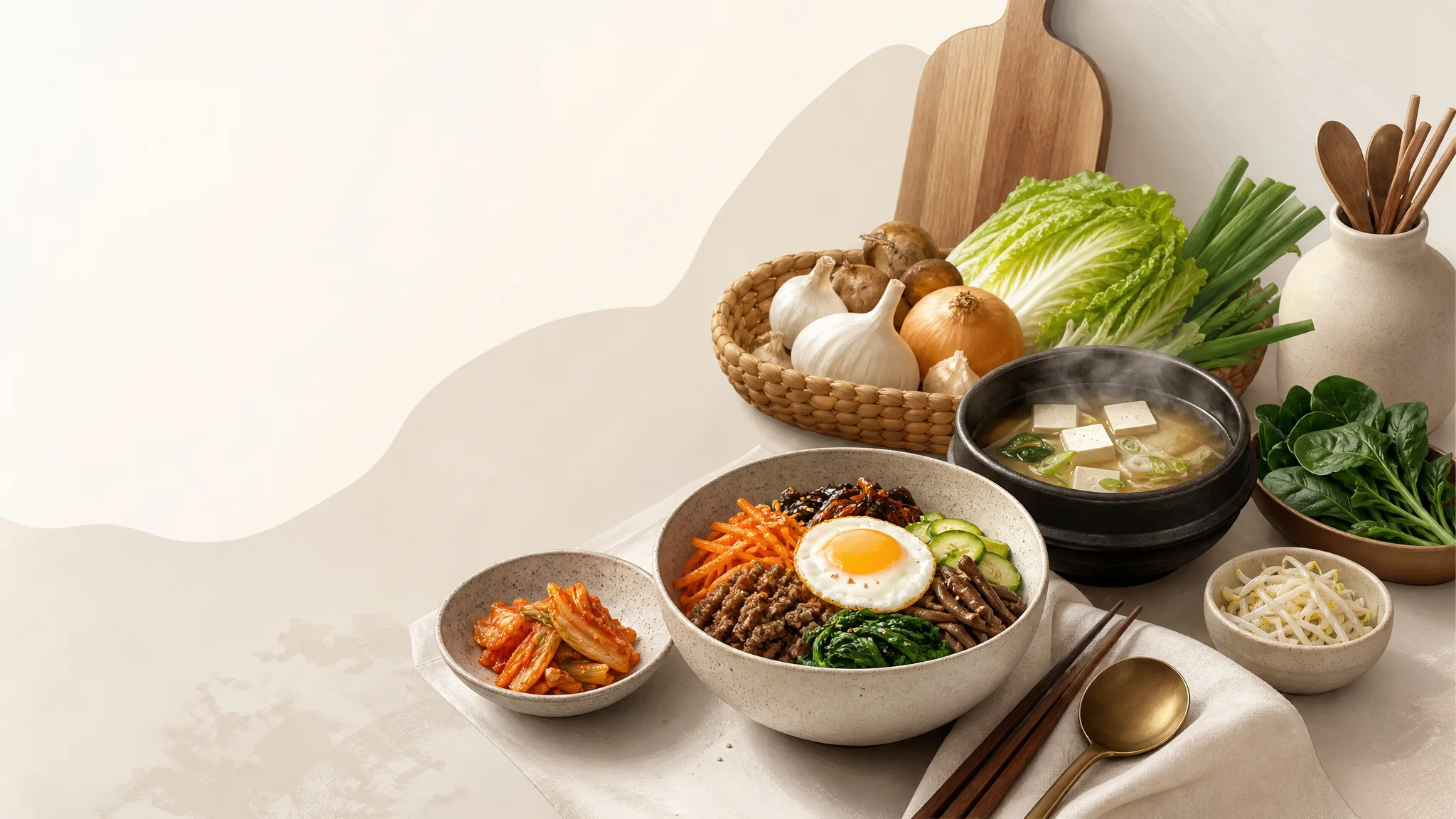
Key summary — Conclusion: It's worth trying Korean food in overseas company cafeterias. Popular dishes (bulgogi, japchae, tteokbokki, samgyetang) already show high demand among local staff, and popular items often sell out quickly — check the morning or the announced “special menu” day and line up early.
Who is this guide useful for? What trade-offs are involved - Audience: local employees, expatriates, business travelers choosing lunch at overseas company cafeterias, and foodservice managers. - Trade-offs: Korean food offers a new taste experience and is often vegetable- and fermentation-centered, which increases satisfaction and a healthy image. However, people sensitive to spiciness, saltiness, or allergens (soy, wheat, seafood, sesame, etc.) may need adjustments. Popular items also risk early sell-out. - Factors that could change recommendations: listed allergens on a menu, whether the dish is served regularly or only on special event days, pricing and meal-ticket policies, and the share of Korean-menu preference at a given site (e.g., some sites report Korean items making up 40–50% of daily meals).
When to order which Korean dishes at a local cafeteria - Statistical basis: Reports indicate that at some Ourhome-run sites, Korean meals served at its U.S. subsidiary rose about 53.4% year-on-year as of 2025, and at its Poland site Korean items account for roughly 40–50% of daily meals. Companies are also working with aT to run “K-Food Day” events to expand local experience.
- Timing guide — when to try:
- Notices for “K-Food Day” or special menus usually come via weekly internal announcements (bulletin boards or email) — line up in the morning right after the notice or pre-order if available.
- Popular items like japchae or bulgogi rice bowls often sell out; aim to arrive within the first 30 minutes of lunch on days they are offered (local reporting notes frequent sell-outs).
- Quick selection rules by dish:
| Dish | Recommended for | Points to watch |
|---|---:|---|
| Bulgogi (rice bowl) | Those who prefer meat and sweet-salty flavors | May contain soy sauce (soy, wheat), check for sesame and onion |
| Japchae (with rice) | Those who like vegetables and glass noodles, want milder spice | Glass noodles (starch of wheat sometimes), soy sauce and sesame oil present |
| Tteokbokki | Those who enjoy spicy food or want a snack-style option | Spicy sauce (gochujang), may include wheat or fish cake (fish) — can request milder spice |
| Samgyetang | Those wanting a restorative, low-irritant protein dish | Contains chicken and ginseng — beware if sensitive to herbal ginseng ingredients |
(Above table: compiled from repeated mentions in local reporting and corporate releases of popular items and common allergen ingredients.)
Korean phrases to use when ordering (for local staff to use directly) - Basic order: “Han-sik, please.” / “One (or two) bulgogi rice bowl(s), please.” - Spice/ingredient adjustments: “Not spicy, please.” / “Please remove the chili.” / “Please skip the kimchi.” - Allergy check (recommended): “Does this dish contain clams, shrimp, milk, eggs, soy, wheat, or sesame?” - Dietary/vegetarian request: “Is there a vegetarian (or vegan) option?” / “Please make it without meat, vegetables only.”
Ingredients, allergies and nutrition checks — practical cautions - Common allergy concerns: Korean dishes can include soy sauce (soy, wheat), gochujang (may contain wheat and soy), fish-based broths or fish cakes, and jeotgal or fish sauce in kimchi — check if you are sensitive to seafood ingredients. - Nutrition points: Fermented items (kimchi) and vegetable-centered dishes (japchae, namul) offer fiber and probiotics, but sauces (soy-based, stir-fry sauces) can be high in sodium — ask about reduced-salt options. - Shift and night workers: Restorative protein dishes like samgyetang can be high-calorie and protein-rich; choose based on whether you need energy replenishment or a lower-calorie meal.
Quick on-the-spot checklist (1-minute lunch check) 1. Is a Korean menu offered today? (Check internal notice/bulletin) 2. Are ‘special ingredients’ (seafood, milk, eggs, peanuts, etc.) listed? 3. Is it a popular item (sell-out risk) — if sold out, what are substitutes? 4. Can spice/salt levels be adjusted (have your request phrase ready)? 5. Payment method (meal ticket, card, prepay) and price (check internal notice)
Tips for on-site staff (foodservice operators) - Label menu items with allergens (include English) and brief nutrition notes (e.g., protein-focused, vegetarian-friendly) to increase selection confidence and satisfaction among local employees. - After a pilot offering, use a short rating survey (1–5 stars) to quickly gauge local preference and improve cost-effectiveness of menu localization.
What was observed (evidence and uncertainty): Reporting and press releases show major Korean catering firms such as Ourhome expanded Korean menus at overseas sites (events and contracts from 2024–2026), and some sites saw large increases in Korean orders. However, specific menu shares and prices vary by operator and site, so check internal notices or the catering company for exact times and prices.
Note: This article uses company releases, a 2025 government survey, and multiple press reports to create a practical ordering and selection guide. For allergy diagnosis or medical advice consult the foodservice operator or a healthcare professional.