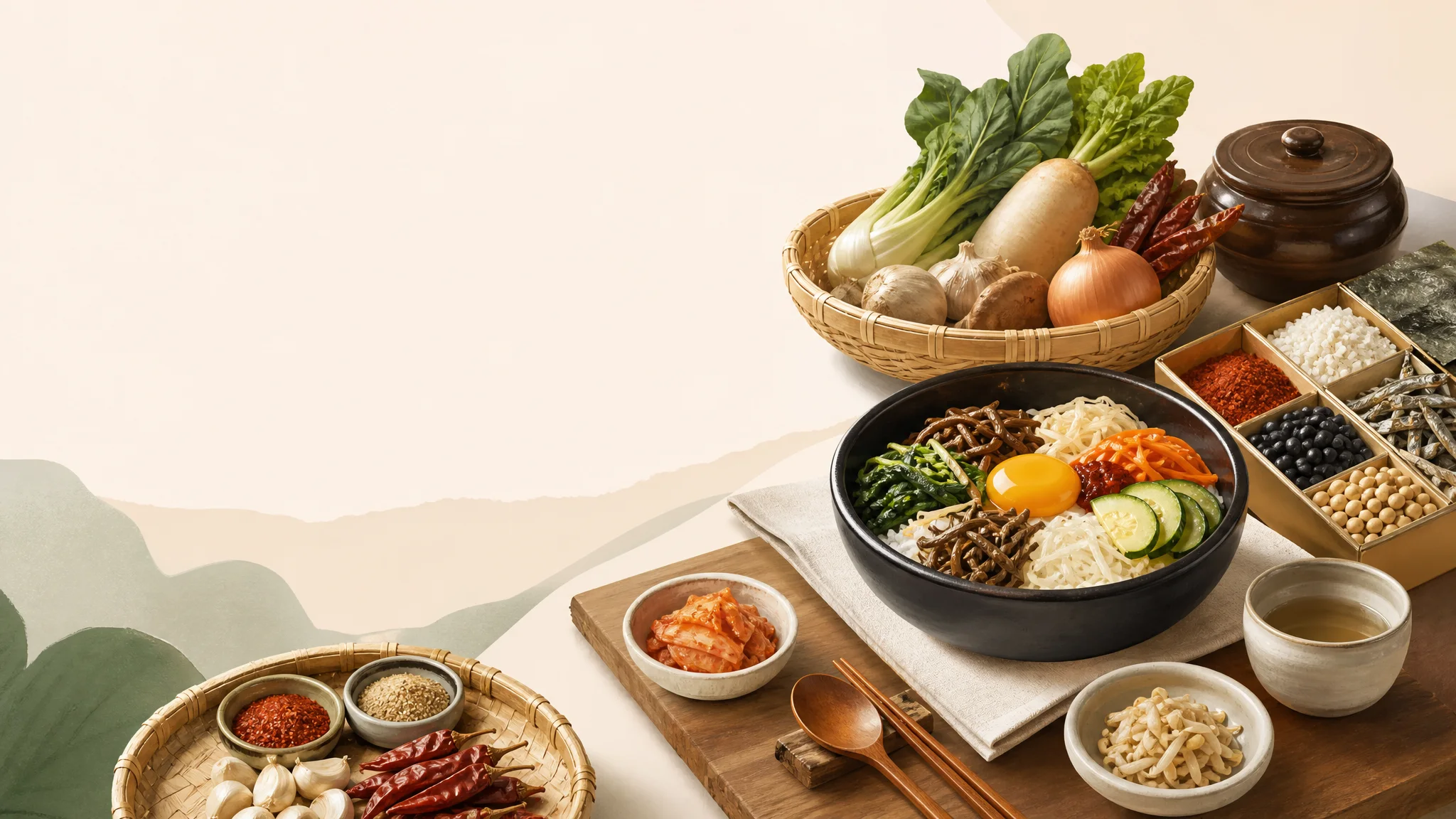
Summary (direct answer): To decide quickly for a meal in Seoul, choose by budget — if your budget is ₩4,000 or less, use markets or convenience stores (kimbap, tteokbokki); with ₩8,000–₩12,000 choose typical Korean dishes (bibimbap, kalguksu, stews); with ₩15,000 or more choose grilled meat (samgyeopsal, bulgogi) or fried chicken. Recent Seoul average prices (reported based on Korea Consumer Agency 'Chamgyeok' data) show bibimbap about ₩11,615, kimbap about ₩3,800, kalguksu about ₩10,038, and kimchi-jjigae about ₩8,654.
Decision rules at a glance — who should pick what and by which criteria - Solo eater / tight budget (up to ~₩5,000): kimbap (one roll avg. about ₩3,800), bunsik/market food (tteokbokki ₩3,000–5,000). Markets (Gwangjang Market, Namdaemun, Mangwon, etc.) are best value. (Well suited for solo foreign travelers and students) - A neat, sit-down meal (₩8,000–12,000): bibimbap (dol-sot option +₩1,000–2,000), kalguksu, kimchi-jjigae set. Lunch sets are often 20–30% cheaper than dinner — consider lunch. - Group / experience (₩15,000+ per person): samgyeopsal (table-grilled, usually ordered from 2 servings up), fried chicken (for sharing). Grill-based meals lower cost per person as group size increases, so choose grill if 2+ people.
Representative dishes table — price, spiciness, solo-friendliness (Seoul reference, compiled from recent guidance and statistics) | Dish | Seoul avg/typical price (reference) | Spiciness | Solo / social | Quick notes | |---|---:|---:|---:|---| | Kimbap | about ₩3,800 (Chamgyeok report) | not spicy | ◎ (easiest) | Contains ham, egg, fish cake — seafood allergens common | Bibimbap | about ₩11,000–12,000 (avg ~₩11,615 reported) | adjustable (gochujang amount) | ◎ | Can choose meat/egg — say “no meat” for vegetarian (confirm broth/seasonings) | Kimchi-jjigae set | about ₩8,600–9,000 | medium (fermentation taste) | ○ | May use anchovy or meat-based stock; pork common | Kalguksu | about ₩10,038 (Seoul avg reported) | not spicy | ◎ | Broth may use anchovy, shellfish, or chicken depending on the shop | Tteokbokki (market) | ₩3,000–5,000 | mild to spicy (varies by vendor) | ◎ | Often includes fish cake and fish-based broth — not vegetarian by default | Samgyeopsal (grill, per 200g eq.) | about ₩21,000 (Seoul avg, converted) | not spicy | △ (usually 2+ people) | Check side dishes and sauces (doenjang, ssamjang) | Fried chicken (whole) | ₩18,000–₩28,000 | choice of sauce/spice | △ (for sharing recommended) | Mostly deep-fried; may contain gluten, egg, milk
(Table note: prices show source averages/ranges. On-site, tourist areas, peak season, and input-cost or exchange-rate shifts can change prices.)
Phrases to use when ordering and basic table etiquette - Calling / ordering - "Excuse me!" (jeogiyo) — to call staff - "One of this / two of this, please." — point at the menu - "Please pack this to go." — for takeout - Spice / ingredient requests - "Make it not spicy, please." / "Less spicy, please." — to adjust heat - "Please remove the meat." — for a near-vegetarian request (confirm broths and sauces) - Banchan & water - "More side dishes, please." — ask for banchan refills (often free) - "Water (or barley tea) please." — usually complimentary - Quick table manners - Cut meat with scissors, make wraps (ssam) and share. At drinking gatherings, pour for others and receive with two hands.
Recommendations by situation (who benefits, and what’s traded off?) - Budget travelers & students (trade-off: variety vs cost) → market tour (Gwangjang, Namdaemun), kimbap, tteokbokki, mayak gimbap. Downside: less hygiene/English info than tourist restaurants. - Solo travelers (trade-off: solitude vs convenience) → kalguksu, bibimbap, kimbap. Pros: solo-friendly ordering and seating. - Vegetarians & allergy-conscious (trade-off: fewer choices vs safety) → temple food, explicitly vegan restaurants, or always check broths and jeotgal (fermented condiments). - Groups & experience seekers (trade-off: higher cost vs social experience) → samgyeopsal, fried chicken, hanjeongsik (shared multi-course).
When recommendations change: outside Seoul prices tend to be lower; festival/peak seasons and tourist sites can be pricier; raw-material or exchange-rate shocks can push menu prices up (as official and media reports based on Korea Consumer Agency 'Chamgyeok' indicate), so plan a higher budget if inflation occurs.
On-site checklist (6 questions before ordering) 1. Budget (how much per person?) 2. Group size (solo/two/3+ people) — check 2-person minimums for grills 3. Dietary restrictions (vegetarian/halal/allergies) — check for broths and fermented condiments containing seafood 4. Desired experience (market street food vs seated restaurant vs barbecue experience) 5. Meal time (lunch sets — lunchtime often cheaper) 6. Payment method (cash/card accepted; tipping not expected)
Local price & policy notes (summary) - Official and media reports citing the Korea Consumer Agency 'Chamgyeok' show that in 2026 some representative Seoul dining items already exceed ₩10,000 on average. Market street food (₩1,000–5,000) remains good value; consider markets or convenience stores to reduce a meal budget.
Note: This guide is based on public information from the Korea Tourism Organization (VisitKR), Seoul city tourism materials, and recent media and travel guides (Yonhap News, NowYeogi, etc.). Always check on-site menus and prices — individual restaurants set their own prices and ingredient listings.