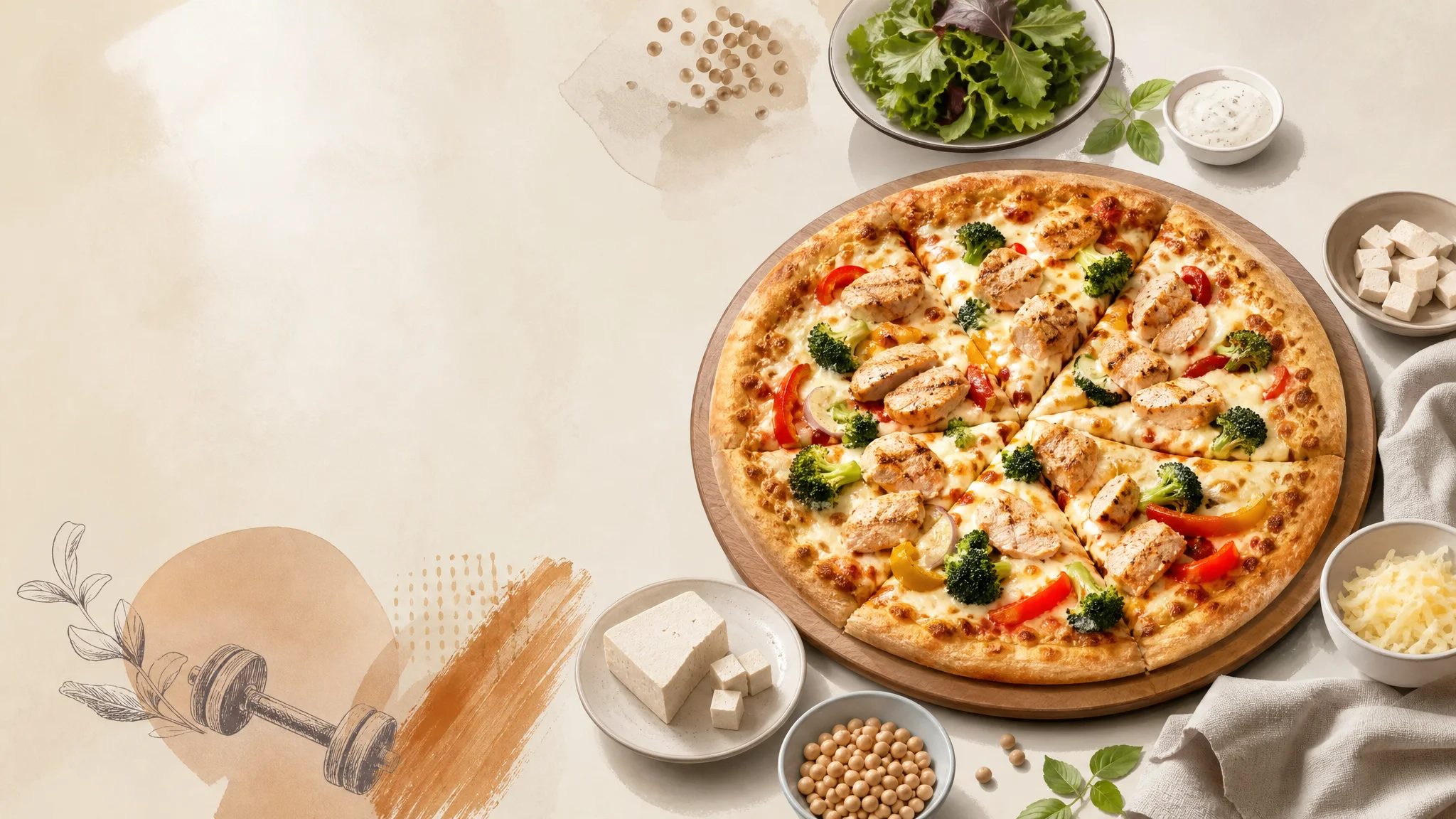
Key summary: Protein pizzas are products that either add protein into the crust (protein listed for the dough itself) or increase toppings to meet a meal's protein target. U.S. chains (e.g., Papa John’s, Blaze) ran tests or limited releases in early 2026 in the U.S., and in Korea frozen/delivery “protein dough” products have appeared, sold at single-item prices around 5,000 KRW or set prices up to about 30,000 KRW. Always check nutrition labels, allergy ingredients, and cooking instructions before purchase.
Who this guide is for - People who want to consume a lot of protein in one meal (e.g., when you have a clear protein target after exercise). - Consumers who order delivery or convenience meals frequently but care about balancing calories and protein. - Consumers who need to check allergy-triggering ingredients in frozen pizzas or their components (dough, toppings).
Who chooses pizza: the trade-off is usually “protein first (muscle maintenance/recovery)” vs “taste / minimizing sodium and processing.” To get more protein, add toppings (chicken breast, sausage, tuna, etc.) or choose products with protein added to the dough. If you want to cut sodium and saturated fat, choose more vegetables, tomato-based sauces, and use less cheese.
Options currently available (2026) — comparison table | Supply type | Example (source/seller) | Listed protein (product basis) | Price (Korea examples) | Notes / cautions | |---|---:|---:|---:|---| | U.S. chain (test/limited) | Papa John’s 'Protein Crust' (press release) | Dough 23g, up to 55g including toppings (8" personal) | U.S. store limited test (2026-01-21) — not sold in Korea | Protein-fortified dough. Limited drop, in-store announcement needed | | U.S. chain (limited) | Blaze Pizza 'Protein-zza' (press release) | About 56g per pie (limited edition) | U.S. stores, limited time | Uses alternative crusts like cauliflower crust; marketed with "GLP-1 friendly" language | | Domestic online/frozen | Jimpizza (protein dough) — listed on Meal2Go and other markets | Product labels example: Bulgogi 225 kcal · protein 18g | 4-flavor set 18,400 KRW / 6-pack 29,400 KRW / single 4,900 KRW (example retail prices) | Frozen delivery. Check product label, allergy info, and expiration date |
(The table is based on press releases and product pages. Always check manufacturer labeling for product-specific ingredients.)
Pre-purchase / pre-order checklist (5-second decision rule) 1. Confirm your target protein amount: set target protein (g) per meal (e.g., 20g, 40g). 2. Check the product label for “protein (g per serving or per pie).” 3. Allergy / ingredients: check for milk (cheese), wheat (gluten), soy, egg. 4. Check sodium and saturated fat: high-protein products can still be high in sodium and saturated fat. 5. Cooking & storage: follow recommended thawing/oven/toaster instructions for frozen products (check return/exchange policy).
Phrases you can use when ordering in Korea (simple order/inquiry lines) - Store/app inquiry: “Is this pizza dough protein (or protein dough)? Please tell me the listed protein (g).” - Delivery/phone order: “Can I change to protein dough? If possible, add chicken breast as a topping.” - Allergy check: “I’m allergic to milk (cheese)/wheat/soy — is that listed on the ingredient label?” - Frozen delivery question: “Please tell me the expiration date and recommended thawing/cooking instructions for this frozen pizza.”
Simple decision rules to help actual purchase (decision tree) - Target protein ≥ 40g/meal → Choose a U.S. chain limited edition (examples: Papa John’s, Blaze) or a highly topped custom pizza. Domestic products can be supplemented by preparing several frozen pizzas as a meal set. - Target protein 15–30g/meal → Domestic frozen ‘protein dough’ pizzas (e.g., Jimpizza bulgogi 18g) are cost-effective (retail prices from ~4,900 KRW with set discounts). - Concerned about sodium or saturated fat → Limit toppings to vegetables and tomato sauce and use half the cheese.
Ingredient & nutrition cautions (allergy and processing) - Dough may contain processed proteins such as whey, soy protein, or isolated soy protein. Always check allergy labeling. - High-protein claims follow manufacturer-defined serving sizes (per pie or per serving); the same protein number can come with very different calories, sodium, and fat across products. - Marketing terms like “GLP-1 friendly” are marketing language and do not guarantee medical safety or efficacy related to prescriptions or drug use. If there is medical uncertainty, consult your physician.
When recommendations might change (uncertainty factors) - If a major franchise announces an official Korea launch (e.g., Papa John’s or Blaze adds nationwide menu items), availability, price, and nutrition labeling could change substantially. - Changes to food regulation (nutrition labeling standards or health claim rules) would require rechecking product labels and advertising. - Technological changes in new products (e.g., plant protein or alternative-meat doughs) could affect taste, texture, and nutrition profiles.
Practical tips — do this now - Quick comparison: frozen protein pizza to eat at home (single ~4,900 KRW) vs occasional dine-in or custom pizza with added protein (extra topping cost). - When choosing frozen products, check in this order: 1) protein (g per pie), 2) how many servings per pie, 3) sodium labeling. - When ordering, use the terms “protein dough” or “protein crust” and add chicken breast, tuna, or egg white as toppings if needed.
Evidence and uncertainty: This guide is based on Papa John’s (press release 2026-01-15), Blaze Pizza (press release 2026-01-06), and Korean product pages (Meal2Go and others, 2026 product pages). Most franchise examples are U.S. test or limited releases (Korea rollout depends on each company’s announcement). Domestic distribution appears concentrated in frozen/convenience channels; always prioritize product label information for nutrition and price details.
If you want, I can help with: (1) a list of sellers offering protein pizza that deliver to your area (e.g., Seoul Gangnam) with live price comparisons, (2) ingredient and allergy analysis for a specific product, or (3) a simple home recipe to make protein dough (including ingredients and cost estimate). Which would you like?