Key summary (conclusion)
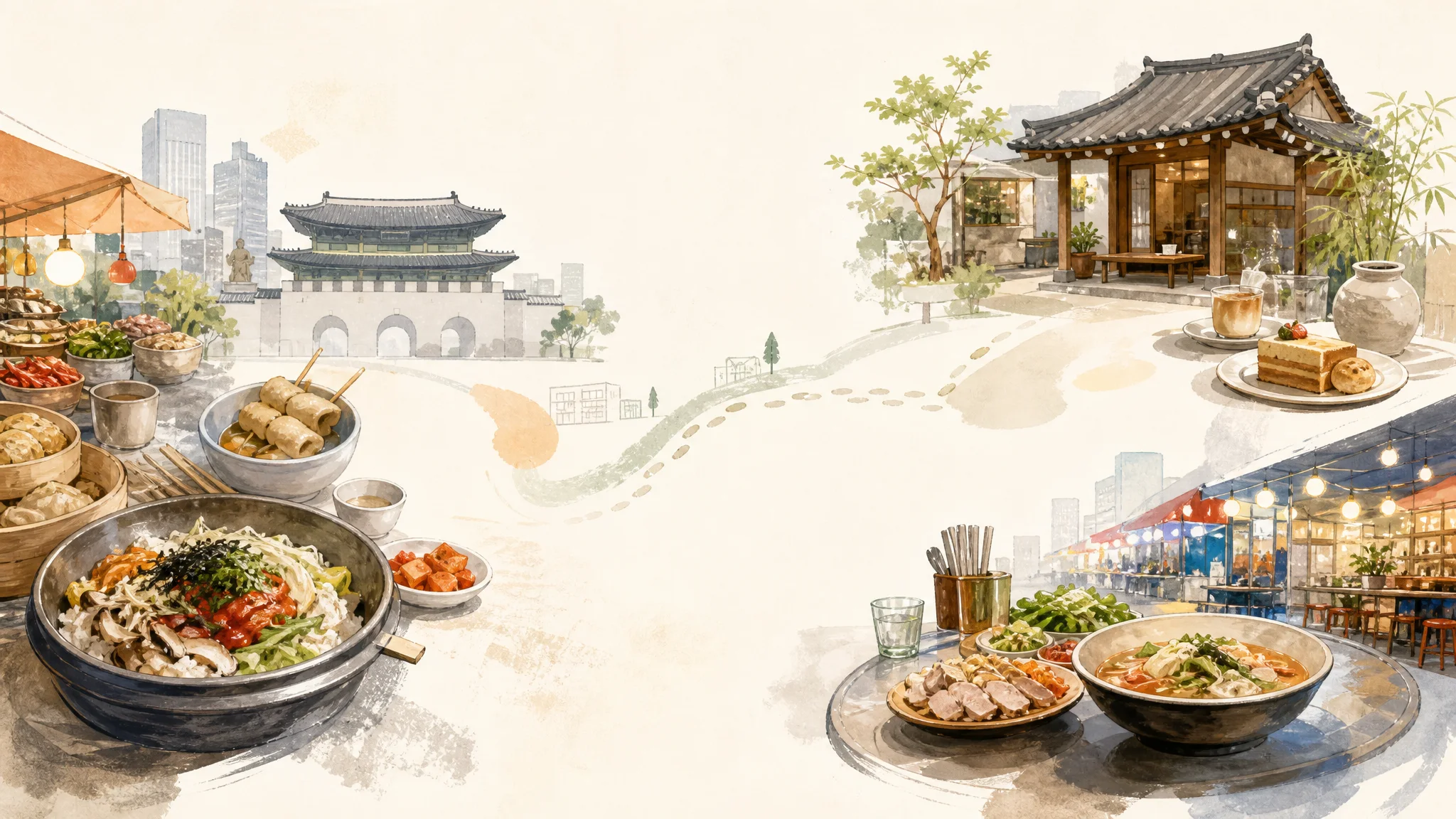
If you’re walking from Gwanghwamun to Jongno 3-ga and need to pick one place to eat: choose Gwangjang Market for traditional market snacks (bindaetteok, mayak gimbap, yukhoe; expect about 6,000–20,000 KRW per person), Ikseon-dong or Insadong for hanok cafés and desserts (5,000–15,000 KRW per person), or the Jongno 3-ga "yajang"/pocha streets for late-night outdoor stalls and grilled meat (samgyeopsal, galmaegisal, etc.; 15,000 KRW+ per person). This guide helps you decide quickly using four criteria: taste, atmosphere, budget, and time.
Who this guide is for — trade-offs when choosing
- Families, older visitors, daytime walkers: after visiting museums (Republic of Korea History Museum) or Gyeongbokgung, consider Gwangjang Market for seated, familiar traditional snacks and pancakes. (comfort and accessibility prioritized → more seating and facilities)
- Young travelers who like photos and cafés: stroll Bukchon and Insadong, then take a break at an Ikseon-dong hanok café for desserts or pastries. (atmosphere and photo spots prioritized → café-level prices)
- Nightlife groups and budget-minded gatherings: finish at Jongno 3-ga’s yajang (pocha) alleys and small grilled-meat restaurants. (atmosphere and late opening prioritized → expect noise and crowds)
Conditions that can change: seasonal opening hours of museums and palaces (Gyeongbokgung varies by season), shop and market opening days and hours (especially on holidays), and whether a specific place operates late at night (varies by season and venue).
Morning–Afternoon: Gwanghwamun–Bukchon area — choosing market snacks for lunch
Recommended when: you want a quick, traditional meal after palace or museum visits.
- Why choose this
- Gwangjang Market lets you sample bindaetteok, mayak gimbap, yukhoe and other traditional foods in one spot. (walkable after sightseeing)
- Typical timing & budget (on-site examples)
- Many stalls in the Gwangjang Market food alleys remain open into the evening (some until about 23:00), but hours vary by shop and area. Bindaetteok 5,000–6,000 KRW, mayak gimbap about 3,000 KRW, and yukhoe dishes often around 15,000 KRW depending on shop and portion.
- Simple order phrases (English-ready)
- Bindaetteok: "Bindaetteok hana juseyo." (빈대떡 하나 주세요)
- Mayak gimbap: "Mayak gimbap du jul juseyo." (마약김밥 두 줄 주세요)
- Dietary notes
- Yukhoe is raw beef. Pregnant people, young children, and immunocompromised individuals should avoid it for safety.
Afternoon–Early evening: Bukchon, Insadong, and Seoul Museum of Craft Arts — tea and dessert
Recommended when: you want a relaxed café break with traditional scenery or to combine craft exhibitions and a stroll.
- Why choose this
- Bukchon and Insadong have many traditional teahouses and hanok-style cafés and bakeries, ideal for photos and relaxation. The Seoul Museum of Craft Arts (SeMoCA) offers free admission for many exhibits and a rooftop garden, making it convenient to visit before heading to a café.
- Typical timing & budget
- Cafés: expect about 5,000–15,000 KRW per person for a drink and dessert. Many museum exhibitions are free (some special exhibitions may charge).
- Order phrases
- Traditional tea: "Sujeonggwa han jan juseyo." (수정과 한 잔 주세요)
- Bakery item to go: "I ppang hana pojanghae juseyo." (이 빵 하나 포장해 주세요)
- Dietary notes
- Some desserts contain nuts or butter — inform the café of allergies in advance.
Evening–Night: Ikseon-dong, Seosun La-gil, and Jongno 3-ga yajang alleys — night meals and drinks
Recommended when: you want alley atmosphere, outdoor pocha stalls, or grilled meat restaurants to end the night.
- Why choose this
- Ikseon-dong concentrates hanok cafés, bakeries, and small restaurants suitable for a light dinner and bar hopping. Jongno 3-ga’s yajang streets are emblematic for outdoor stalls, cheap anju, and a lively night scene. (Time Out named Jongno 3-ga the world’s coolest neighbourhood in 2026, citing the revival of pocha stalls and nighttime craft and bar culture.)
- Typical timing & budget
- Expect 15,000 KRW or more per person at meat restaurants or yajang (including meat, side dishes, and drinks). Some pocha stalls and restaurants remain open past midnight; closing times vary by venue.
- Simple order phrases
- Samgyeopsal for two: "Samgyeopsal 2-inbun juseyo." (삼겹살 2인분 주세요)
- A bottle of soju: "Soju han byeong juseyo." (소주 한 병 주세요)
- A bowl of makgeolli: "Makgeolli han sabal juseyo." (막걸리 한 사발 주세요)
- Dietary notes
- Outdoor stalls can be smoky and leave odors on clothes and hair. Grilled meats are not suitable for people with meat allergies or dietary/religious restrictions.
Practical checklist (walking & meal decision)
- Check the time: museums and palaces are best visited during daytime. Gyeongbokgung has seasonal opening hours and regular closed days (Tuesdays) — check ahead.
- Set your budget: under 10,000 KRW per person for light market snacks; 10,000–25,000 KRW for café + dessert or a simple meal; 25,000 KRW+ if you include grilled meat and drinks.
- Group preference: quiet sightseeing and photo-focused → Bukchon/Insadong cafés; lively local drinking culture → Jongno 3-ga yajang.
- Allergies & health: check for raw meat (yukhoe) and oyster-containing pancakes before ordering.
- If you can’t find seating: try seated traditional restaurants in Gwangjang Market or indoor barbecue restaurants in Jongno 3-ga to avoid competing for yajang tables.
Quick decision table (at a glance)
| Priority/purpose | Recommended place | Signature items | 1‑person budget (estimate) | Best time |
|---|---|---|---|---|
| Cheap traditional snacks | Gwangjang Market food alleys | Bindaetteok, mayak gimbap, yukhoe | 6,000–25,000 KRW | Lunch–evening (some stalls open late) |
| Hanok atmosphere & cafés | Ikseon-dong, Insadong | Hanok café drinks, soufflés, bakery items | 5,000–15,000 KRW | Afternoon–early evening |
| Exhibition + light meal | Seoul Museum of Craft Arts → Gwangjang Market | Museum visit then market food | Museum free + market meal 6,000–20,000 KRW | During museum opening hours |
| Nightlife & pocha stalls | Jongno 3-ga yajang alleys | Samgyeopsal, anju, pocha snacks | 15,000 KRW↑ | Evening 18:00–late (varies by venue) |
(Reference) Always check live operating info for museums and palaces before visiting: the Republic of Korea History Museum generally operates 10:00–18:00 (night openings on Wed & Sat until 21:00) and its permanent exhibitions are free; Gyeongbokgung has seasonal hours, regular closed days (Tuesdays), and free admission categories (e.g., hanbok wearers, those aged 24 or under, and those 65+). The National Folk Museum is located within Gyeongbokgung and offers free admission. The Seoul Museum of Craft Arts (SeMoCA) posts night-opening schedules and Monday/closing information and generally offers free admission except for some special exhibitions.
What else to check (final note)
- Confirm museum, palace, and museum exhibition closures or night openings for your planned date (e.g., Republic of Korea History Museum, Gyeongbokgung/Royal Palaces, National Folk Museum, Seoul Museum of Craft Arts).
- Individual shop hours in Gwangjang Market, Ikseon-dong, and Jongno 3-ga vary widely and often change on weekends, public holidays, and during festivals.
If you want, tell me the specific date you’ll visit (or "today"), and I’ll compile up-to-date opening hours, recommended shops open that day, and concrete real-time suggestions for lunch or dinner on this route.