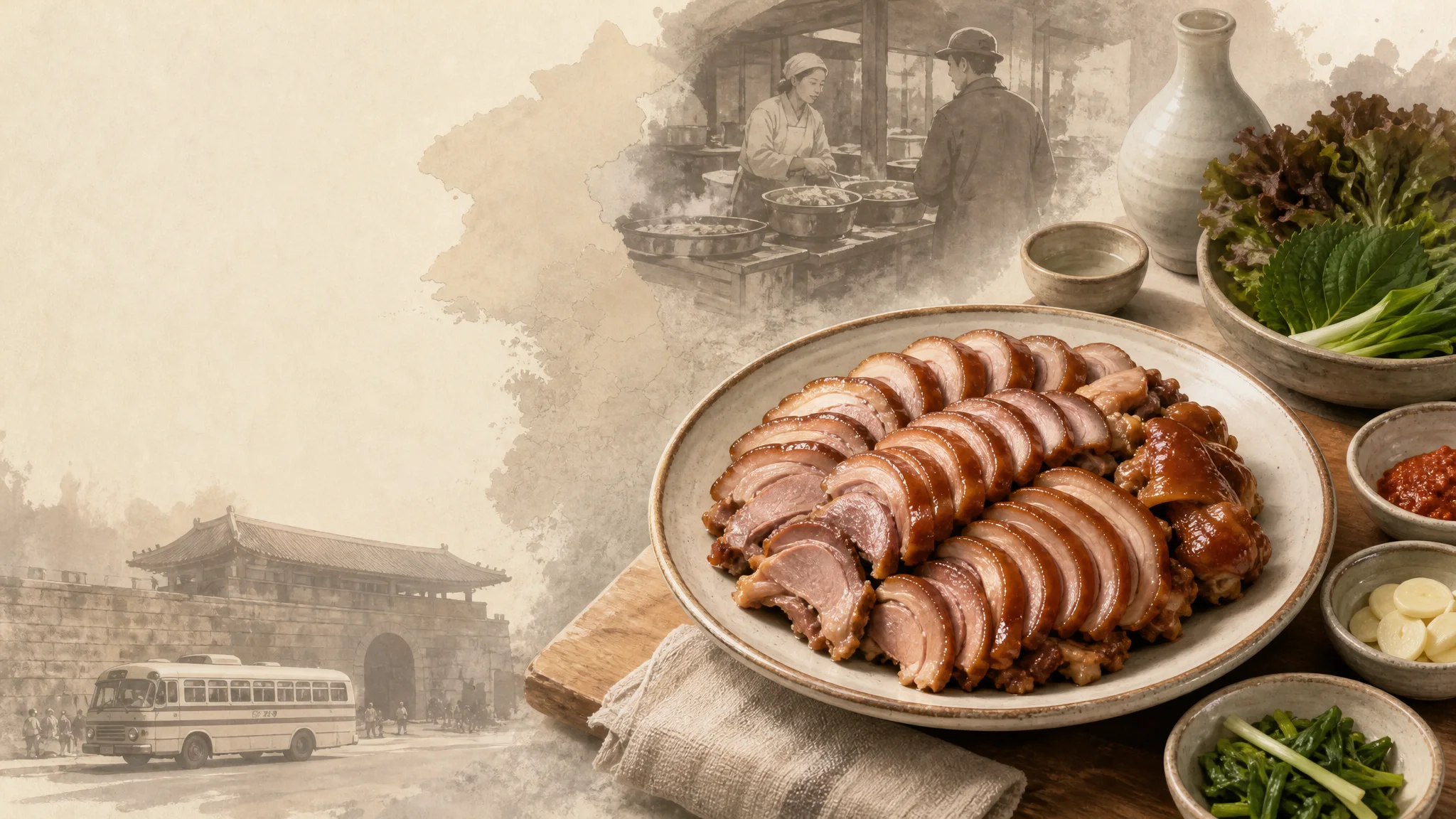
Summary (one sentence): The modern jokbal recipe of Jangchung-dong is known to have been started in the 1960s by female migrants from Pyeongan province (North Korea), and the most typical way to eat it is to order a medium-to-large portion at a Jangchung shop and share it with makguksu or bindaetteok.
What it is — origins and flavor characteristics Jangchung-dong jokbal traces back to jokbal dishes developed in the 1960s by women from Pyeongan province who settled in Seoul after the war and migration. Traditionally, many shops simmer pig trotters with simple ingredients such as soy sauce, ginger, scallion and onion to emphasize a clean, chewy texture. (Sources: Michelin Guide, Seoul Future Heritage, Korea Tourism Organization).
Where to go in Jangchung-dong — comparison table of recommended shops | Shop (example) | Location (brief) | Characteristics | Typical price range (example) | |---|---:|---|---:| | Pyeongan-do Jokbal | Inside Jangchung-dong alley | Considered part of the 'original' line, clean/straightforward style, often featured in broadcasts/comics | jokbal medium: ₩40,000 range (menu example) | | Ddung-ddungi Grandma's House | Main area of Jangchung-dong | Old-shop vibe, value-oriented, set menus available | jokbal medium: ₩40,000 range~ / large: ₩50,000 range (example) | | Jangchung Hanbang Jokbal (branch example) | Franchise-style within Jangchung-dong | Herbal (hanbang) flavor based on medicinal herbs, offers takeout/delivery | medium/large/x-large: ₩28,000~₩36,000 range (branch menu example) |
(Menu and prices vary by shop; the examples above are based on publicly available menus and dining-data from the 2020s — confirm current prices and portion labels by phone before visiting.)
Ordering, takeout and delivery practical tips (who it's good for) - Who it's for: people who enjoy traditional old shops and atmosphere, or groups of 2–4 looking for a cost-effective meat appetizer/meal. - Core trade-off when choosing: opting for the 'traditional origin' shops often means waiting and relying on on-site-only items (such as platter-style makguksu), while choosing convenience-oriented branches or delivery may result in milder aroma or altered preparation.
Ordering checklist (applies to dine-in and delivery):
- Choose portion size for your group: many menus use small (2 people)/medium (3 people)/large (4 people) labeling. A common example price is a medium around ₩40,000.
- When dining in: ordering a platter makguksu or bindaetteok helps cut the richness.
- Check whether takeout/delivery is available: some Jangchung-dong shops do offer takeout and delivery, but popular hours can lead to early sell-outs. (The Michelin Guide notes that in some cases delivery can be available until early morning.)
Common order phrases (Korean):
- "족발 중(또는 대) 하나 포장할게요."
- "매장에서 먹을게요, 쟁반막국수도 하나 주세요."
- "배달 가능하세요? 배달이면 몇 시까지 받나요?"
Dining, allergies and cautions - Allergies: contains pork and soy sauce (soy/wheat). Some shops may use medicinal herbs or mild spices. If you must avoid pork for allergy or religious reasons, confirm before ordering. - Nutrition: jokbal is high in collagen and also high in fat and sodium; excessive intake can be heavy.
Decision rules before visiting (practical): 1. If you prioritize 'traditional flavor': choose long-standing shops such as Pyeongan-do Jokbal or Ddung-ddungi Grandma's House and accept weekend-evening waiting. 2. If you prioritize convenience/delivery: pick hanbang (herbal) branch-style shops or places that advertise delivery, noting that aroma and recipe may differ. 3. If you are price-sensitive: order a medium (approx. 3-person) portion and share sides like makguksu to reduce per-person cost.
Author and sources: This guide was edited and summarized by the K-Food Compass editorial team using publicly available information from the Michelin Guide, Seoul Future Heritage, the Korea Tourism Organization, and DiningCode. Historical, price, and operating details in the text are examples based on the cited sources' menus and records; confirm actual prices and opening hours with the shop before visiting.
Recommended action: Jangchung-dong shops often have long waits on weekend evenings, so consider visiting on a weekday evening or at lunchtime, or call ahead to reserve or arrange takeout.