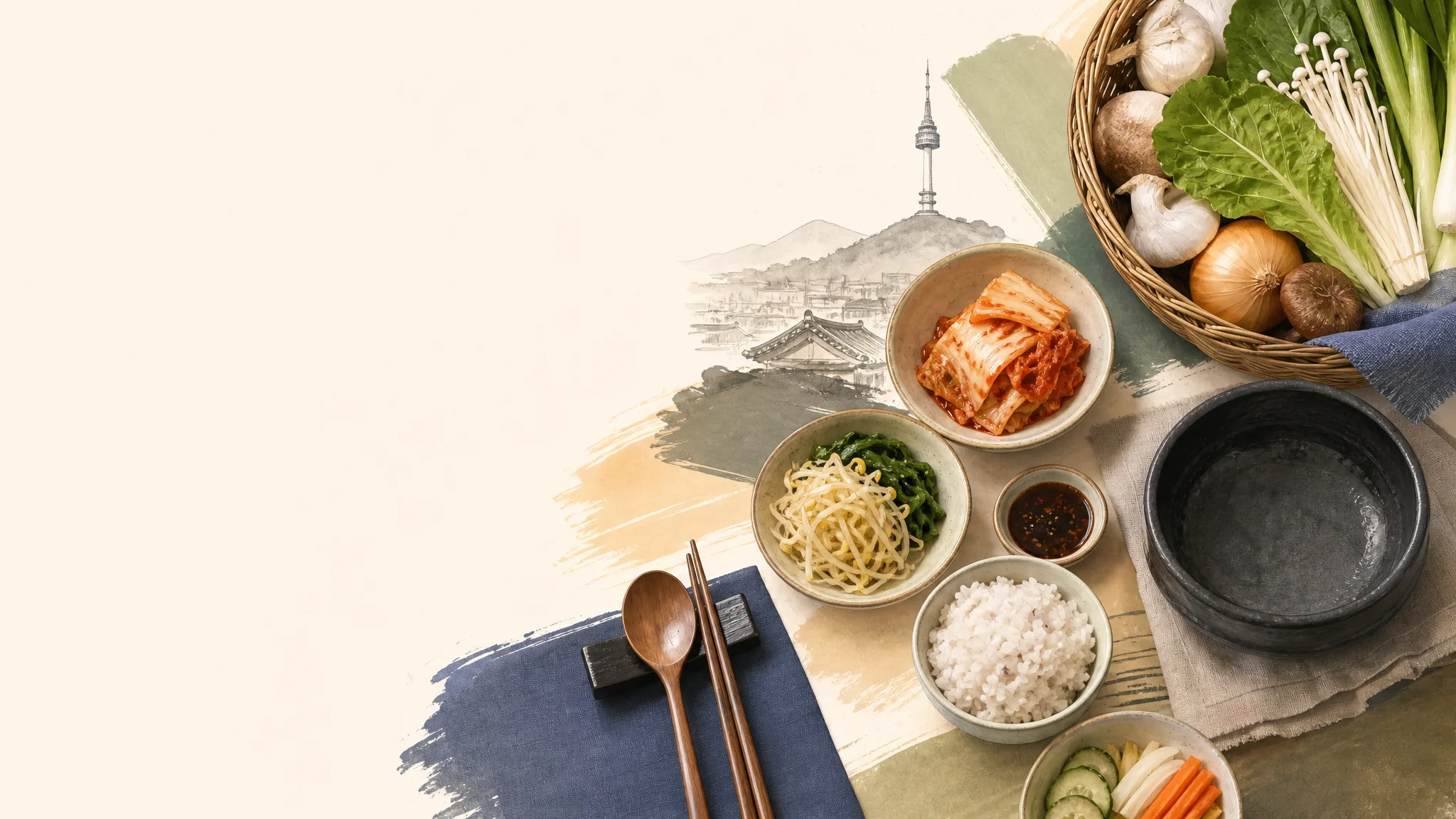
Quick summary — Bottom line: Travelers and first-time visitors can budget using: “kimbap (₩3,800-range) for a fast meal, bibimbap (≈₩11,700) for a simple full plate, and samgyeopsal (200g ≈₩21,300) for a meat feast.” Consider lunch discounts (typically ₩1,000–2,000) and regional variation — the same menu can cost substantially more or less depending on location and time.
Who this guide is for, and what trade-offs you accept - Audience: first-time visitors in Seoul (especially central/tourist areas), budget-conscious travelers, and people who need a few local ordering phrases. - Trade-offs: Cheap venues (snack shops/convenience stores selling kimbap) are time-efficient and cost-effective but vary in taste and waiting time. Tourist-area restaurants are convenient but often 20–30% more expensive. Lunch specials (around 11:30–14:00) are the safest way to get the same dish cheaper.
What to pick (quick decision rules) | Situation | Recommended dish | Seoul average (Chamgagyeok-based) | Why / cautions | |---|---:|---:|---| | Cheapest single meal (fast) | Kimbap (one roll) | ₩3,800-range (≈₩3,838) | Ready at convenience stores and snack shops; ask about vegetarian options — fillings may include pickled radish and egg. Watch for allergens (egg, processed fish products). | | Balanced single plate (solo / beginner) | Bibimbap | ≈₩11,700 | Vegetable-and-rice centered; choose whether to add meat. Comes with gochujang (spicy red pepper paste) — ask for less if you dislike heat. | | Hearty noodle / evening meal | Kalguksu | ≈₩10,000 | Broth-based, popular in colder months. Broth may use clams or anchovy stock (shellfish allergy caution). | | Meat party (2+ people) | Samgyeopsal (per 200g) | ≈₩21,300 (per 200g) | Social grilling; expect extra side dishes and alcohol costs. Ordering three portions (600g) for two people is common. | | Easy choice for visitors | Baekban (set meal) | Typical menu examples show prices like ₩11,000 | A single set of rice, soup, and side dishes reduces decision fatigue. Look for menu names like “jeongsik” or “jeongsik (baekban)”. |
(Numbers vary by area and time — check Chamgagyeok for the latest averages.)
Phrases to use when ordering (onsite and simple expressions) - Basic order: "I’ll have this, please." → "이거 하나 주세요." (I-geo ha-na ju-se-yo) — the most versatile phrase. - Kimbap: "One kimbap, please." → "김밥 한 줄 주세요." (gimbap han jul juseyo) - Bibimbap (request less spicy): "Please make the bibimbap not spicy / put only a little gochujang." → "맵지 않게 해 주세요." (maepji anhge hae juseyo) - Meat (samgyeopsal) order: "Two portions of samgyeopsal, please." → "삼겹살 이인분 주세요." (samgyeopsal i-inbun juseyo) - Vegetarian / allergy query: "I have an allergy. Does this contain shrimp/clams/soy/salmon/egg/pork?" → "새우(조개/간장/돼지고기/계란) 들어가요?" (saewoo/doegae/ganjang/dwaejigogi/gyeran deureogayo?)
Tip: Lunch specials are often labeled as “lunch” or “jeongsik” on the menu. Visiting between 11:30 and 14:00 often saves around ₩1,000–2,000.
Practical cautions for ingredients, allergies, and vegetarians - Kimchi: Traditional kimchi often contains anchovy sauce or salted shrimp. If you need strictly vegan kimchi, ask about “no jeotgal” or whether a “vegan kimchi” is available. - Soups and stews: Many use anchovy or clam kelp stock — be careful with shellfish/seafood allergies. - Meat: Pork (samgyeopsal) and beef (bulgogi) are common. For religious or vegetarian/halal concerns, confirm ingredients and cooking oil (some places use pork fat). - Alcohol: Soju and beer are common; restaurants may charge per bottle (e.g., soju often around ₩6,000–7,000), adding to the bill.
When recommendations change (variables and checklist) - Lower budget: Kimbap, snack foods, and convenience-store meals are the most consistent low-cost options. Outside Seoul or in suburbs, prices are generally lower. - Vegetarian / allergy priority: Choose vegetarian baekban (e.g., mountain-vegetable bibimbap) or vegetarian restaurants. Always confirm absence of jeotgal/anchovy. - Want a local food experience: Try street food at traditional markets (Gwangjang, Namdaemun), but check hygiene and ingredients ahead. - Price fluctuation: Average prices are updated regularly; price-sensitive travelers should check Chamgagyeok (Korea Consumer Agency) for current tables.
60-second practical checklist before you go out 1. Today's budget: under ₩3,800? → kimbap/convenience store. ₩8,000–12,000? → kimchi jjigae / bibimbap / kalguksu. ₩20,000+? → samgyeopsal or special set. 2. Allergy list (shrimp/clams/egg/soy/peanuts) prepared in one sentence: “I have an XX allergy. Is XX included?” 3. Practice one ordering line: “(menu) one, please. Make it not spicy.” 4. If it's lunch, check for a “lunch” special — you’ll often save ₩1,000–2,000.
---
Sources: Korea Consumer Agency "Chamgagyeok" (dine-out average prices for Seoul), Korea Tourism Organization (explanations and examples for baekban/set menus), and local analysis (Seoul Window, Korea POV). Prices are Seoul averages at the time of data collection (mid-2026) and vary by shop, area, and time of day.